
 By Henry Joseph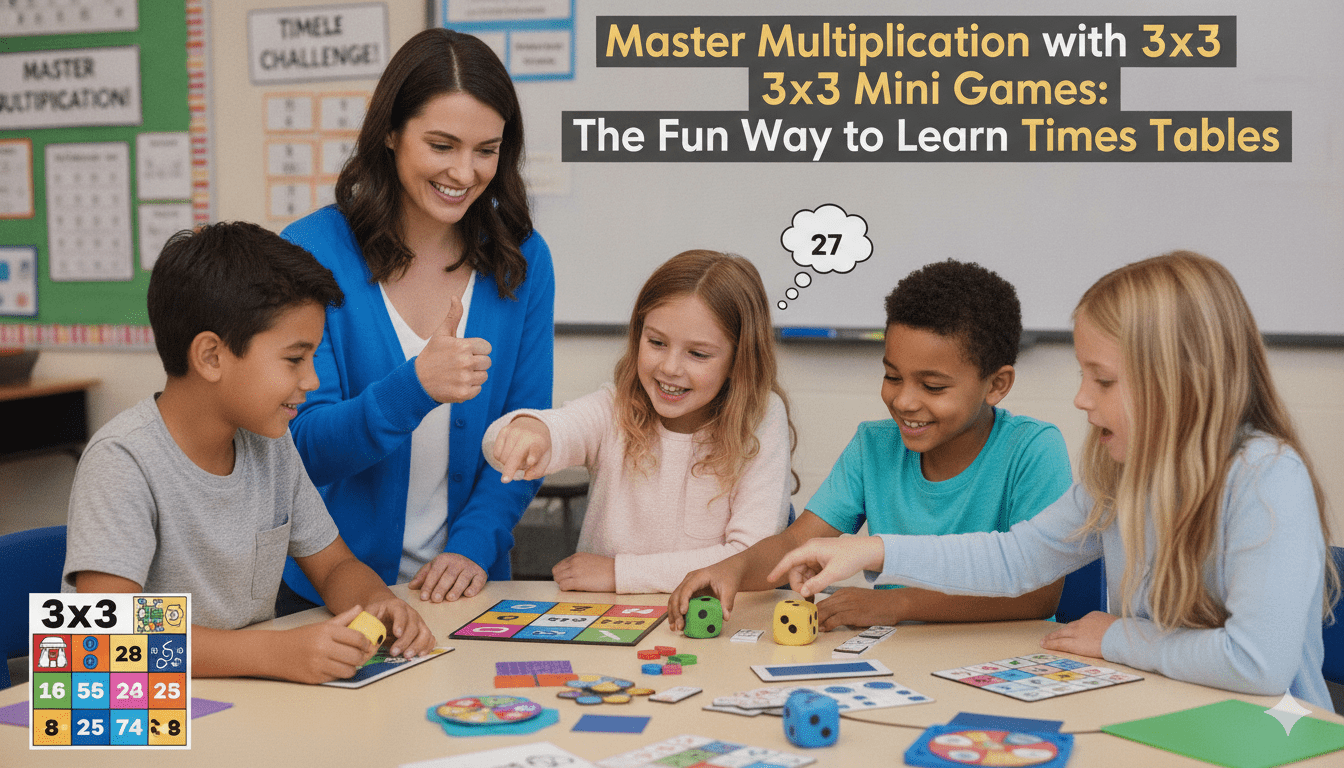
Learning math does not have to be boring or stressful for kids. Many students feel worried when they see a big grid of numbers on a paper worksheet. Fortunately, you can change how your child practices math facts by using interactive online tools. A great solution is using 3×3 mini games to make learning times tables feel like play instead of hard work. These quick activities turn boring memorization into an exciting challenge that kids actually want to do every single day.
When children play 3×3 mini games, they do not realize they are studying important school subjects. They just focus on winning the game, scoring points, and beating their own high scores. This playful method helps build math confidence and clears away school anxiety very quickly. In this complete guide, we will explore the best ways to use these small math grids to master multiplication. You will learn how simple digital games can transform your child into a math superstar in no time.
What Are 3×3 Mini Games for Math?
A 3×3 grid is a simple square that has nine small boxes inside it. In the world of online education, 3×3 mini games use this basic shape to test math skills. The grid usually shows three rows and three columns of numbers or math problems. Players must match the correct multiplication answers to the right boxes to clear the board. Because the grid is small, the game feels fast and easy to finish for young minds.
These short activities are perfect for younger students who lose focus during long lessons. A standard worksheet can feel overwhelming with fifty different problems staring at a child. However, 3×3 mini games break the massive world of multiplication down into tiny, manageable pieces. Kids can finish a single round in less than two minutes, which keeps their brains happy and engaged. It is the ultimate bite-sized learning tool for modern elementary students.
Why Times Tables 3×3 Mini Games Actually Work
Human brains love patterns, and games are excellent at showing how numbers fit together. When children play times tables 3×3 mini games, they use visual memory to find correct answers. They see how numbers multiply across rows and down columns in real-time. This active participation creates stronger brain connections than just reading a flat textbook page over and over.
Expert Insight: Studies show that gamified learning increases math retention by up to 40%. When stress goes down, memory retention goes up.
Another big benefit of times tables 3×3 mini games is the instant feedback loop. On a traditional paper test, a child has to wait hours or days to see their grade. In a mini digital game, the computer tells them the answer instantly. If they make a mistake, they can fix it right away. This instant correction prevents bad habits from forming in their young minds.
How 3×3 Mini Games Times Tables Build Speed
Speed is a massive part of mastering basic multiplication facts in elementary school. If a child takes ten seconds to answer a single problem, harder math will feel impossible later. Playing 3×3 mini games times tables helps kids recall answers without stopping to count on their fingers. The fast-paced nature of the digital grid encourages swift thinking and quick finger movements.
Most digital platforms include a timer feature to add a little friendly competition to the mix. When playing 3×3 mini games times tables, kids try to beat their fastest speed records. This repetitive practice sharpens their response times until multiplication becomes a natural reflex. Within a few weeks of daily play, they will shout out answers instantly without any hesitation.
Exploring Timestables.com 3×3 Mini Games
One of the best places to find these educational tools is a popular website called Timestables.com. The timestables.com 3×3 mini games are designed specifically for elementary school students. The website is very clean, safe, and incredibly easy to navigate for young children. Parents do not have to worry about complicated setups or dangerous links while kids practice.
When you open the timestables.com 3×3 mini games, you can select the exact number family you want to practice. For example, your child can focus strictly on the twos, fives, or nines. The simple nine-box setup keeps the focus entirely on math rather than flashing background distractions. It is an amazing free resource that belongs in every parent’s digital bookmark folder.
The Benefits of Times Tables Com 3×3 Mini Games
Using specialized portals like times tables com 3×3 mini games offers structured rewards for your child. Many of these digital platforms reward players with virtual stars, cool badges, or funny animations. These small digital prizes make kids feel proud of their hard work and math achievements. It transforms a tough academic subject into a fun treasure hunt for success.
Additionally, times tables com 3×3 mini games allow for highly customized learning tracks. If your child struggles with the seven times table, you can load a grid filled only with sevens. This targeted practice saves time because kids do not waste energy on facts they already know perfectly. It turns weak academic areas into strong skills through focused, enjoyable repetition.
How to Set Up a Daily 3×3 Mini Games Routine
Consistency is the absolute secret weapon when it comes to mastering elementary math facts. You do not need to force your child to play 3×3 mini games for hours at a time. In fact, practicing for just ten minutes every single day yields much better results. Short, daily bursts of practice keep the multiplication rules fresh in a child’s mind without causing brain fatigue.
Try creating a simple routine where your child plays a few rounds right after school. You can also use 3×3 mini games as a fun reward after they finish their other homework. Because the games are highly entertaining, kids rarely complain about this extra study time. It easily replaces mindless screen time with a high-value educational activity that builds real brainpower.
Combining Physical Play with Digital 3×3 Mini Games
You can easily bring the magic of the nine-box grid into the physical world too. After your child plays 3×3 mini games online, draw a quick grid on a sidewalk with chalk. You can write multiplication equations in the squares and have your child jump onto the correct answer. Mixing physical movement with digital gaming creates an incredibly powerful learning experience.
This double-sided approach targets both visual learners and active kids who need to move around. You can alternate between digital screen time and physical backyard math grids throughout the week. Using 3×3 mini games in multiple formats keeps the subject fresh and prevents boredom from setting in. Your child will start seeing math as a fun part of their regular lifestyle.
Tracking Progress with Your Child’s Math Grid Games
It is important to celebrate milestones to keep your child motivated during their math journey. When they play 3×3 mini games, keep a small paper chart on the kitchen refrigerator. Track how many seconds it takes them to clear a full nine-box multiplication grid. Watch together as their completion times drop from two minutes down to thirty seconds.
Seeing visual proof of their improvement boosts a child’s self-esteem in a massive way. They learn that hard work and regular practice lead directly to real-life success. The skills learned from mastering 3×3 mini games will extend far beyond the math classroom. Your child will approach other difficult school subjects with a positive, hard-working attitude.
Transitioning From 3×3 Mini Games to Harder Math
Once your child dominates the nine-box grid, they will be ready for bigger academic challenges. The confidence built during 3×3 mini games prepares them for larger math puzzles and double-digit multiplication. They will no longer panic when a teacher hands them a large math test at school. They will simply view the big test as a collection of smaller, familiar grids.
You can gradually introduce larger games, like 4×4 or 5×5 grids, as their skills grow over time. However, always return to 3×3 mini games whenever they need a quick confidence boost or a fast warm-up. This reliable grid remains an excellent tool for quick mental maintenance throughout the school year. It is a foundational stepping stone toward advanced mathematical thinking.
Conclusion
Math does not have to be a source of tears, arguments, or stress in your household. By introducing 3×3 mini games, you turn an intimidating subject into an awesome digital playground. Your child will master their times tables, increase their calculation speed, and build unstoppable school confidence. It is a simple, free, and highly effective way to support your child’s elementary education.
Take action today by opening up a math grid game on your computer or tablet. Sit down with your child and cheer them on during their very first round of play. You will love watching their worries disappear as they laugh, play, and learn multiplication simultaneously. Turn math time into game time tonight and watch your young student thrive!
Frequently Asked Questions
1. What age group is best for 3×3 mini games?
These activities are perfect for children aged 7 to 11 years old. This is the exact time when schools introduce multiplication and times tables to students. The simple layout keeps younger kids from feeling overwhelmed by too many numbers.
2. Can my child play these math games for free?
Yes! Most times tables 3×3 mini games are completely free to play on popular educational websites. You do not need to buy expensive software or pay for monthly subscriptions to use them. Always ensure you are using a safe, ad-free site.
3. Do 3×3 mini games work for children with ADHD?
Absolutely. Children with short attention spans respond incredibly well to these short math activities. Because a single round lasts less than two minutes, it holds their attention easily. The instant rewards keep them engaged without causing mental fatigue.
4. How often should my child practice these games?
For the best results, your child should practice for 5 to 10 minutes every day. Short daily sessions are much better for memory than one long hour on the weekend. The regular repetition helps lock the multiplication facts into their long-term memory.
5. Do I need to download an app to play these games?
No downloading is necessary for most of these options. You can play timestables.com 3×3 mini games directly inside any standard web browser on a phone, tablet, or computer. This makes it incredibly easy to practice while traveling or waiting in line.
6. Can these games replace standard school homework?
These games are an amazing supplement to schoolwork, but they should not completely replace regular homework assignments. Use them as a fun warm-up tool or a reward after school assignments are finished. They help make regular school homework much faster and easier to complete.